Cover-Ups
Tattoo Cover-Ups in Atlanta: What's Possible and What's Not
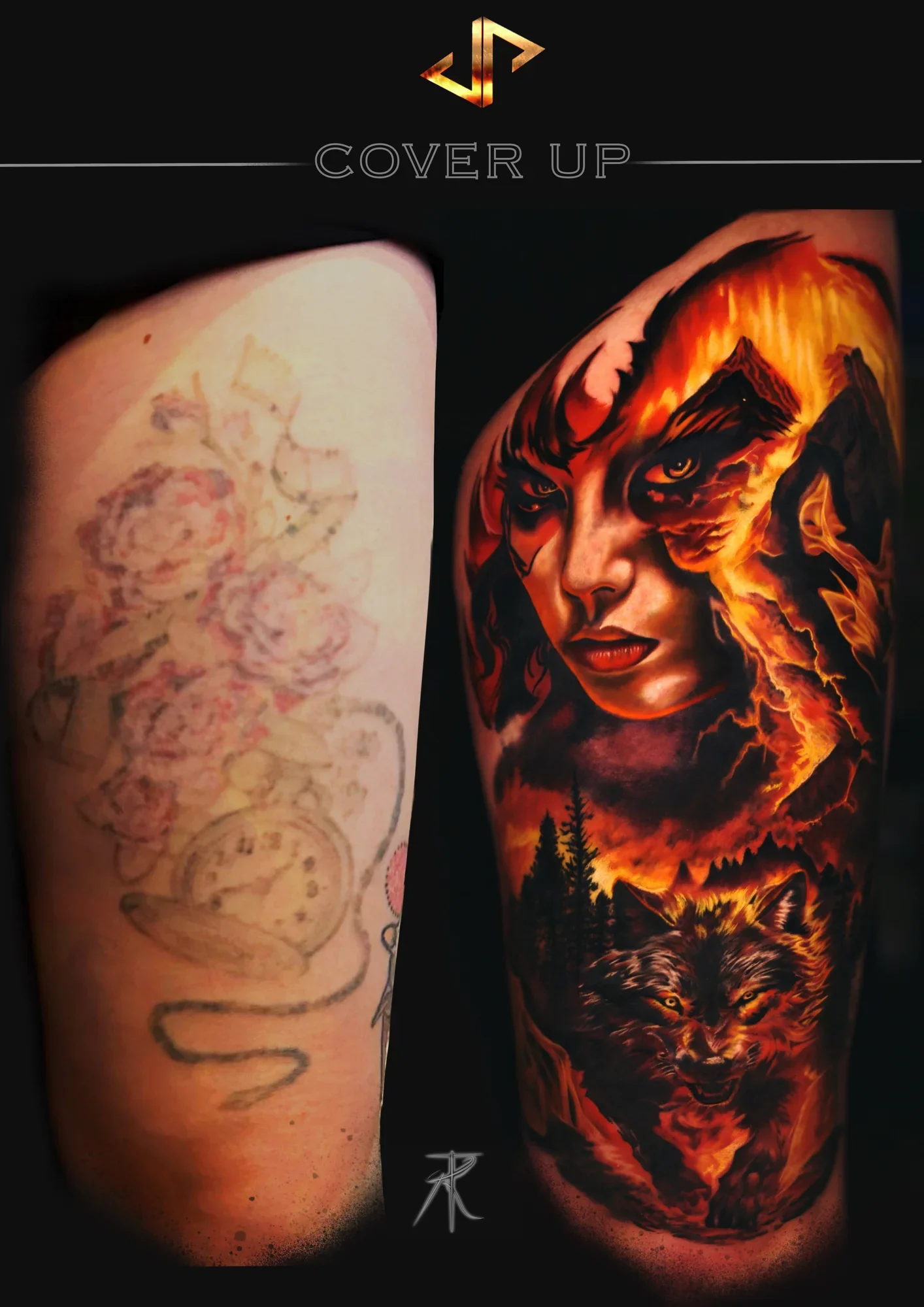
Not every tattoo ages the way you hoped it would. Maybe the work wasn't executed well to begin with. Maybe your taste has changed. Maybe the piece just doesn't represent who you are anymore. Whatever the reason, you're not alone—and you're not stuck.
Cover-up tattoos are one of the most requested services in the industry, but they're also one of the most misunderstood. A great cover-up isn't as simple as slapping a bigger, darker design over the old one. It's a technical challenge that requires strategic thinking, real skill, and an honest conversation about what's achievable.
Why Cover-Ups Are More Complex Than They Look
The fundamental challenge of a cover-up is that you're not starting with a blank canvas. There's existing ink in the skin, with its own density, color saturation, and placement, and every design decision has to account for what's already there.
A heavy, dark tribal piece requires a different approach than a faded script tattoo. A small, light piece in an easy location is a very different project than a large, saturated one in a tricky spot. The variables matter, and they're not always intuitive. That's why cover-ups demand an artist who doesn't just have technical skill, but who also has the experience to evaluate existing work honestly and plan accordingly.
The Strategic Design Process
At JP Alfonso Studios, cover-ups are never approached casually. The process starts with a careful assessment of the existing tattoo—its size, its ink density, its color range, and how much it's faded over time.
From there, the design is developed strategically. The goal isn't just to conceal the old piece; it's to create something genuinely compelling in its own right. That often involves layering design elements to work with (rather than fight against) the existing ink, using contrast and shading to redirect the eye, and in many cases expanding the composition beyond the boundaries of the original tattoo to give the new piece room to breathe.
This kind of thoughtful problem-solving is where the difference between a good cover-up and a great one lives.
When Cover-Ups Work Best
Cover-ups tend to be most successful under a few conditions. Faded ink is easier to work over than heavily saturated ink. A new design that's larger than the original gives the artist more room to incorporate and disguise the old work. And styles that rely on depth, shading, and darker tonal ranges, like black-and-grey realism, are naturally well-suited to cover-up work because they offer more visual tools to work with.
That said, every situation is different, and a blanket statement about what will or won't work isn't particularly helpful without seeing the actual tattoo.
Being Honest About Limitations
Here's the part not every studio will tell you upfront: not every tattoo can be fully covered. Some pieces are too dark, too large, or too densely packed for a cover-up alone to solve the problem. In those cases, a combination of laser lightening sessions followed by a cover-up may be the better path.
A studio that's honest with you about these limitations before you commit, rather than overpromising and underdelivering, is one worth trusting. At JP Alfonso Studios, honesty is part of the consultation process. If a cover-up is feasible, you'll know exactly what to expect. If it's not, you'll get a realistic alternative plan.
The Value of Getting It Right This Time
For most people considering a cover-up, this is their second chance at getting the tattoo experience right. That's worth taking seriously.
Cutting corners or going with a cheaper option because the first tattoo was already a disappointment is a recipe for ending up in the same position again. A premium cover-up, done by an artist who specializes in technically demanding work, transforms a source of frustration into something you're actually proud of.
For clients in Atlanta seeking that kind of transformation, JP Alfonso Studios offers a process designed to evaluate, plan, and execute cover-ups at the highest level.